
What Makes Sciatica Worse? (And Why It Isn’t Getting Better)
Dr. Jon Saunders, B.Kin., D.C. | Updated March 2026
If your sciatica is not improving, the issue is often not a lack of stretching or exercise.
It’s ongoing irritation.
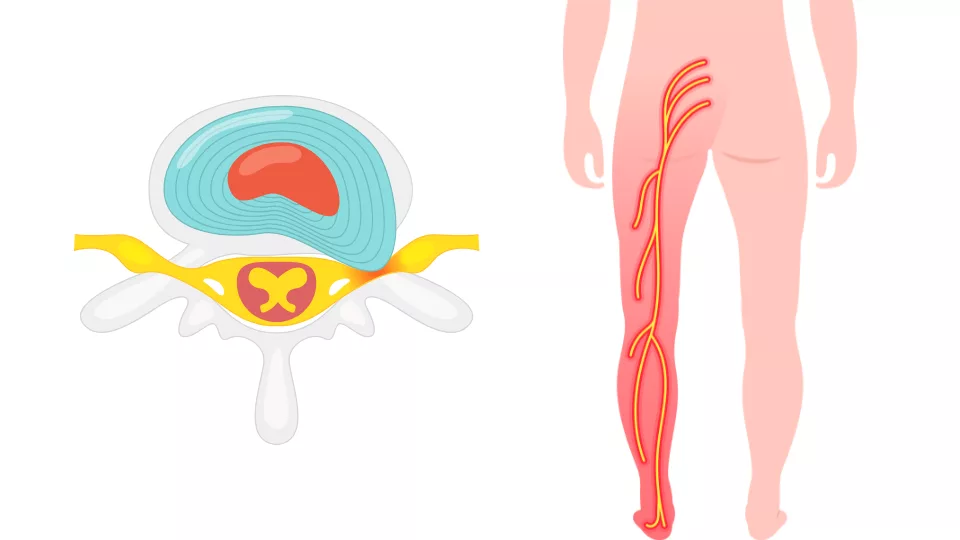
Sciatica is nerve-related pain, usually caused by irritation or compression of a lumbar nerve root. When that nerve is inflamed, certain everyday habits can keep it aggravated — even if you think you’re helping it.
Let’s break down what makes sciatica worse and what to do instead.
Watch: What Makes Sciatica Worse?
In this video, I break down the most common daily habits that delay sciatica recovery and explain how to reduce nerve irritation safely.
Prolonged Sitting
One of the most common aggravators is extended sitting.
When you sit — especially in a slouched position — pressure inside the lumbar discs increases. If a disc is already irritated, that added pressure can maintain nerve sensitivity.
Many people with desk jobs sit for hours at a time and wonder why their leg symptoms don’t improve.
Why Sitting Worsens Sciatica
- Increased disc pressure
- Reduced spinal movement
- Sustained flexion stress on the lower spine
- Reduced blood flow to irritated tissues
What You Can Do at Home
- Stand every 20–30 minutes
- Use lumbar support
- Take short walking breaks
- Avoid slouched posture
Small, consistent adjustments can significantly reduce daily irritation.
Heavy Lifting and Twisting
Flexion combined with rotation under load is a common trigger for flare-ups.
This includes:
- Lifting from the floor without proper mechanics
- Twisting while carrying weight
- Snow shoveling
- Rotational gym exercises during active symptoms
Why This Happens
If a disc is irritated, loading it in a flexed and rotated position increases stress on the outer fibers. That can heighten nerve compression or inflammation.
What You Can Do at Home
- Use proper hip hinge mechanics
- Keep loads close to your body
- Avoid twisting under load during flare-ups
- Temporarily reduce heavy lifting until symptoms calm
Avoidance here is strategic, not permanent.
Aggressive Hamstring Stretching
This is one of the biggest misunderstandings in sciatica care.
People feel tightness in the back of the leg and assume they need deeper stretching.
But often, that tightness is neural tension — not just muscle restriction.
Straight-leg toe touches and forceful hamstring stretches pull directly on the irritated nerve.
Why This Makes Sciatica Worse
When the nerve is inflamed, aggressive tension increases sensitivity. It can amplify leg pain, tingling, or burning sensations.
What You Can Do at Home
- Use gentle sciatic nerve glides
- Keep movements controlled
- Stay within pain-free range
- Stop if symptoms intensify and linger
Nerves respond to gradual exposure — not force.
High-Impact Exercise During a Flare
Running, jumping, and heavy compression-based gym exercises can aggravate symptoms when the nerve is already sensitive.
Movement is helpful. The wrong movement at the wrong time is not.
Why This Happens
Impact increases compression through the spine. If disc pressure is part of the problem, repetitive loading can prolong irritation.
What You Can Do at Home
- Walk daily
- Use low-impact cardio
- Introduce strengthening gradually
- Avoid maximal loading during active pain
You’re not avoiding exercise — you’re modifying it.
Prolonged Bed Rest
Short rest periods can be useful during acute pain.
Extended inactivity is not.
Why Bed Rest Can Delay Recovery
- Muscles weaken
- Joints stiffen
- Pain sensitivity increases
- Circulation decreases
Controlled movement promotes recovery more effectively than total shutdown.
What You Can Do at Home
- Take short walks
- Perform gentle mobility exercises
- Resume light activity as tolerated
Progression should be gradual, not forced.
Why Sciatica Often Lingers
Sciatica tends to persist when three things continue:
- Mechanical pressure remains unaddressed
- The nerve stays sensitized
- Core stability and hip control are insufficient
If daily habits keep irritating the nerve, healing slows. Even your diet and food choices may be making your sciatica worse.
Reducing aggravation is step one. Rebuilding control is step two.
When Professional Help Makes Sense
If symptoms:
- Persist beyond several weeks
- Radiate below the knee consistently
- Worsen with minimal activity
- Interfere with sleep or walking
It may be time for structured evaluation.
In our clinic in Newmarket, Ontario, we assess:
- Postural and alignment stress
- Signs of disc involvement
- Joint mobility restrictions
- Core strength and endurance
- Neurological indicators
Care is not one-size-fits-all.
Our Approach to Sciatica in Newmarket
- Posture and Alignment Correction
Reducing mechanical stress on the lumbar spine can decrease nerve irritation. - Spinal Decompression (When Indicated)
If clinical testing suggests disc pressure, decompression may help reduce load on the nerve root. - Progressive Core Strengthening and Mobility Training
Once irritation decreases, stability must improve to prevent recurrence.
Daily habit correction remains part of the plan throughout care.
If you’re looking for professional sciatica treatment in Newmarket, a proper assessment helps identify whether disc pressure, joint irritation, or instability is driving your symptoms.
Struggling With Sciatica That Isn’t Improving?
If your leg pain continues despite stretching, rest, or exercise, the issue may be ongoing mechanical irritation rather than muscle tightness.
At our clinic in Newmarket, Ontario, we use a structured approach to sciatica that focuses on:
- Posture and alignment correction
- Spinal decompression when disc involvement is present
- Progressive core strengthening and mobility
If you’d like clarity on what’s actually driving your symptoms, learn more about our professional sciatica treatment in Newmarket or book an assessment to discuss your situation.
Final Thoughts
If your sciatica is not getting better, ask yourself:
- Am I sitting too long?
- Am I stretching aggressively?
- Am I loading the spine during a flare?
- Am I resting too much?
Often, what makes sciatica worse is not dramatic — it’s repetitive daily stress.
Reduce irritation.
Move strategically.
Rebuild stability.
That approach is far more effective than chasing temporary relief.
Chiropractic on Eagle
2:30 – 6:00 PMTuesday 7:30 – 10:45 AM
2:30 – 5:30 PMWednesday 2:30 – 6:00 PMThursday 7:30 – 10:45 AM
2:30 – 5:30 PMFriday ClosedSaturday ClosedSunday Closed