
Sitting Is Making Your Sciatica Worse (Here’s Why)
Dr. Jon Saunders, B.Kin., D.C. | Updated June 2026
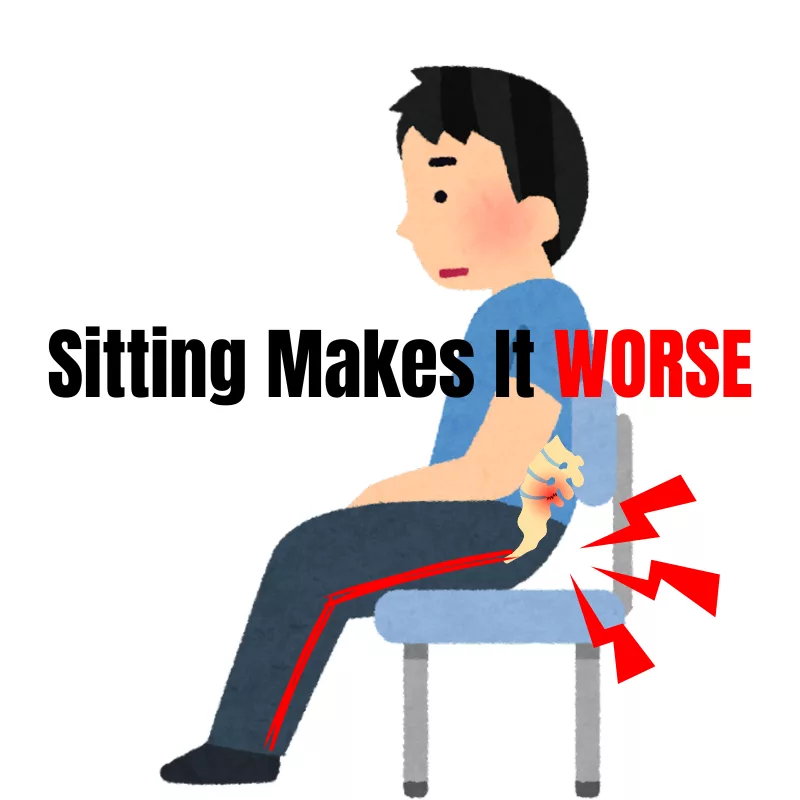
If you have sciatica, you’ve probably noticed something frustrating: sitting often makes it worse.
For many people:
- symptoms increase while driving
- sitting at a desk aggravates the pain
- getting up feels stiff or painful
- symptoms travel further down the leg after prolonged sitting
This is extremely common with sciatica and nerve irritation.
🎥 Watch: Stop Doing These 5 Things if You Have Sciatica
Why Sitting Often Makes Sciatica Worse
Sciatica usually involves irritation of the sciatic nerve.
One of the biggest reasons sitting aggravates symptoms is: sitting increases pressure on the lower back and discs.
This pressure can:
- irritate nerves
- stress spinal discs
- tighten surrounding muscles
- reduce movement in the low back and hips
The Disc Pressure Problem
Research has shown that sitting often places more pressure on the lumbar discs than standing.
This becomes even worse when:
- posture collapses
- you sit for long periods
- the lower back rounds forward
👉 Learn more about Lumbar Disc Bulges
Poor Sitting Posture Makes Everything Worse
Many people sit with:
- rounded shoulders
- forward head posture
- collapsed low back posture
Over time, this can:
- increase nerve irritation
- tighten hip muscles
- stress the spine
- worsen sciatica symptoms
Driving Is Often One of the Biggest Triggers
Driving combines:
- prolonged sitting
- vibration
- limited movement
This is why many people notice:
- increased leg pain while driving
- numbness in the foot
- burning pain into the calf
- stiffness getting out of the car
Sitting Also Tightens the Hips
Prolonged sitting can tighten:
- hip flexors
- piriformis muscles
- hamstrings
This may place additional stress on:
- the pelvis
- low back
- sciatic nerve pathway
Signs Sitting Is Aggravating Your Sciatica
Your symptoms may be sitting-related if:
- pain increases the longer you sit
- driving aggravates symptoms
- standing or walking provides relief
- symptoms travel further down the leg after sitting
- you feel stiff standing up
What Actually Helps?
1. Move More Frequently
One of the simplest things you can do: stop sitting for long uninterrupted periods.
Even standing or walking for a few minutes can help reduce pressure.
2. Improve Sitting Posture
Focus on:
- keeping the chest up
- supporting the lower back
- avoiding slouched posture
Small posture changes can reduce stress on the spine.
👉 See Posture Correction
3. Address the Underlying Cause
Sciatica may involve:
- disc irritation
- joint dysfunction
- nerve compression
- muscle imbalance
Treating the root cause matters most.
4. Improve Mobility and Strength
Targeted exercises can help:
- improve spinal stability
- reduce recurrence
- support long-term recovery
5. Consider Spinal Decompression
For some disc-related cases, spinal decompression may help reduce pressure on irritated nerves.
👉 Learn more about Spinal Decompression
When Should You Get It Checked?
You should consider an assessment if:
- pain travels down the leg
- symptoms are worsening
- sitting consistently aggravates symptoms
- numbness or tingling are present
- symptoms are interfering with work or daily life
Sciatica Treatment in Newmarket
At Chiropractic on Eagle, we help patients in:
- Newmarket
- Aurora
- East Gwillimbury
- Bradford
- Local surrounding areas
identify the underlying causes of sciatica and nerve irritation.
If sitting consistently aggravates your sciatica…your body is telling you something.
While temporary relief strategies may help, identifying and addressing the underlying cause is often the key to long-term improvement.
Struggling with Sciatica That Gets Worse Sitting?
A proper assessment can help determine what’s irritating the nerve and what can be done to improve it.
Frequently Asked Questions
Related Articles:
Chiropractic on Eagle
2:30 – 6:00 PMTuesday 7:30 – 10:45 AM
2:30 – 5:30 PMWednesday 2:30 – 6:00 PMThursday 7:30 – 10:45 AM
2:30 – 5:30 PMFriday ClosedSaturday ClosedSunday Closed