
How to Tell If Your Dizziness Is Coming From Your Neck or Inner Ear
Dr. Jon Saunders, B.Kin., D.C. | Updated May 2026
Dizziness can be confusing — especially when you’re not sure where it’s actually coming from.
Some people describe:
- spinning sensations
- feeling off balance
- lightheadedness
- motion sensitivity
- feeling “foggy” or unsteady
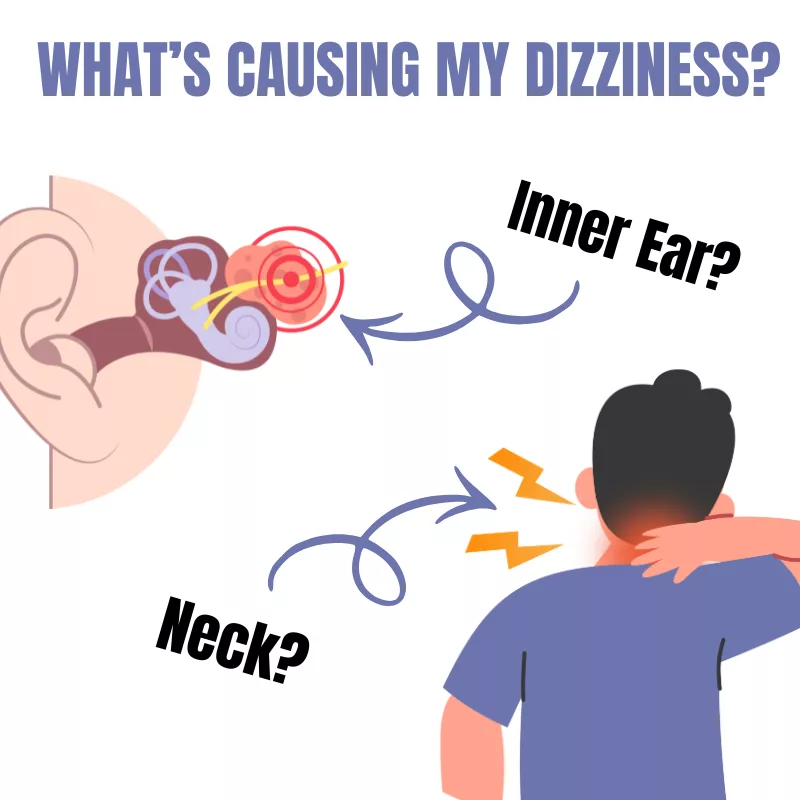
Two of the most common causes we see are: inner ear vertigo (BPPV) and neck-related dizziness (cervicogenic dizziness).
The challenge is that the symptoms can feel very similar.
🎥 Watch: Neck Dizziness
Why the Difference Matters
Both conditions can cause dizziness…but they come from very different areas of the body.
👉 Inner ear vertigo involves the vestibular system
👉 Cervicogenic dizziness involves dysfunction in the neck
Understanding the difference helps determine the right treatment approach.
What Is Inner Ear Vertigo (BPPV)?
One of the most common causes of vertigo is: Benign Paroxysmal Positional Vertigo (BPPV)
This occurs when tiny crystals inside the inner ear move into the wrong position.
Typical symptoms include:
- sudden spinning sensations
- dizziness rolling in bed
- vertigo looking up or down
- short episodes triggered by position changes
- nausea during spinning episodes
What Is Cervicogenic Dizziness?
Cervicogenic dizziness is dizziness that originates from the neck.
It is often associated with:
- neck stiffness
- poor posture
- previous whiplash or concussion
- tension in the upper neck
People often describe:
- feeling off balance
- floating sensations
- dizziness with neck movement
- symptoms associated with neck tension
👉 Learn more about Cervicogenic Dizziness
Signs Your Dizziness May Be Coming From the Inner Ear
Your dizziness may be more likely inner-ear related if:
- the room feels like it is spinning
- symptoms are triggered by rolling in bed
- episodes are sudden and intense
- symptoms worsen with quick head movements
- nausea is significant
This is commonly seen with BPPV.
Signs Your Dizziness May Be Coming From Your Neck
Your dizziness may be more likely neck-related if:
- you also have neck pain or stiffness
- symptoms worsen with posture or prolonged sitting
- dizziness occurs with neck movement
- headaches accompany the dizziness
- symptoms started after injury or stress
Neck dysfunction is often overlooked as a cause of dizziness.
Can You Have Both?
Yes. This is more common than people realize.
Someone may:
- develop BPPV initially
- then develop neck tension afterward
- or already have underlying neck dysfunction contributing to symptoms
This is why a proper assessment matters.
Why Proper Assessment Is Important
Dizziness should never be treated with guesswork.
Different causes require different approaches.
For example:
- BPPV often responds well to repositioning maneuvers
- cervicogenic dizziness often requires improving neck function and posture
Treating the wrong cause can delay recovery.
What Helps Neck-Related Dizziness?
Treatment may include:
- gentle chiropractic care
- posture correction
- mobility exercises
- upper cervical assessment
- reducing tension in the neck and upper shoulders
👉 See our Upper Cervical Chiropractic page
Dizziness & Vertigo Treatment in Newmarket
At Chiropractic on Eagle, we help patients in:
- Newmarket
- Aurora
- East Gwillimbury
- Bradford
- Local surrounding areas
determine whether their dizziness may be related to:
- the inner ear
- the neck
- or a combination of both
Dizziness is frustrating…but identifying the cause is often the turning point.
Neck dizziness and inner ear vertigo can feel similar, but they require different approaches
Understanding the difference is the first step toward proper treatment.
Not Sure What’s Causing Your Dizziness?
A proper assessment can help determine whether your symptoms may be coming from the neck, inner ear, or another source.
Frequently Asked Questions
Chiropractic on Eagle
2:30 – 6:00 PM
2:30 – 6:00 PMTuesday 7:30 – 10:45 AM
2:30 – 5:30 PMWednesday 2:30 – 6:00 PMThursday 7:30 – 10:45 AM
2:30 – 5:30 PMFriday ClosedSaturday ClosedSunday Closed